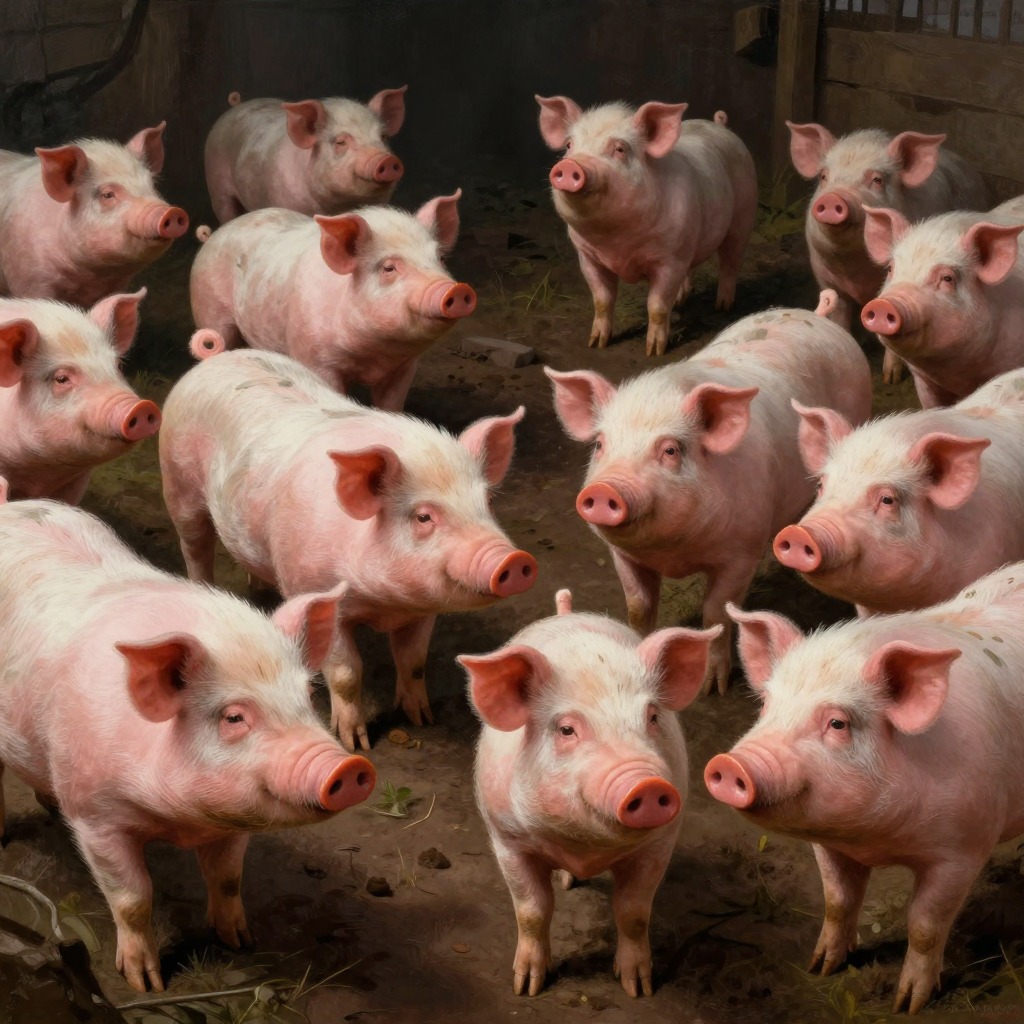
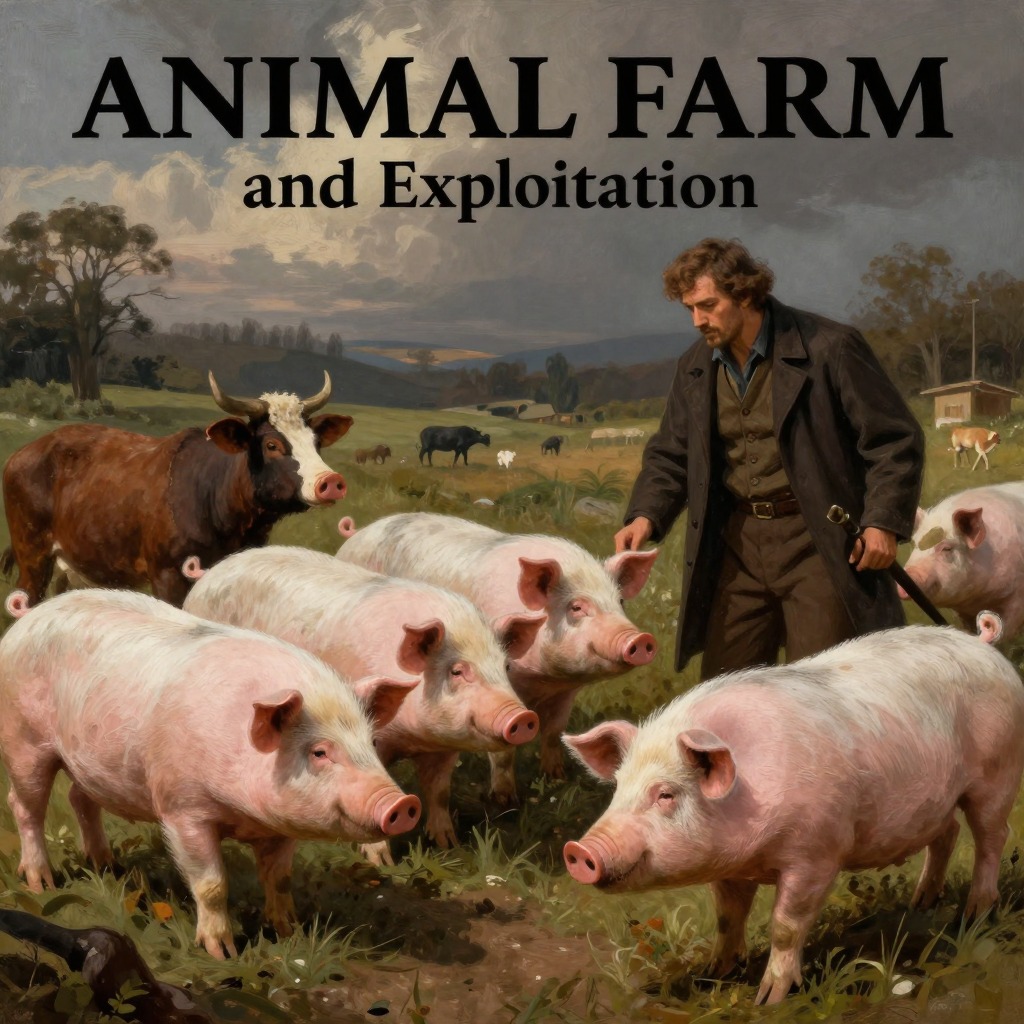
Pigs Move into Farmhouse
The Pigs Move into Farmhouse is a pivotal event in the narrative of Animal Farm, representing the moment when the pigs, led by Napoleon, openly claim the privileges of the former human rulers and begin to dismantle the egalitarian ideals of the Rebellion. Occurring after the farm has begun trading with humans and the pigs have consolidated their authority, this event signals a profound shift in the social order, as the pigs not only occupy the farmhouse but also alter the foundational laws to legitimize their actions, setting the stage for the complete transformation of the farm into a hierarchy indistinguishable from the one it had overthrown.
Background and Context
By the time the pigs moved into the farmhouse, the initial revolutionary fervor had given way to a system of increasing inequality. The pigs had already established themselves as the brainworkers of the farm, justifying their exclusive consumption of milk and apples by claiming these were necessary for their health and the successful management of the farm . The expulsion of Snowball and the subsequent abolition of the Sunday-morning Meetings had eliminated democratic debate, and Napoleon's rule was enforced by a pack of nine fierce dogs . The farm had also begun trading with the human world through the intermediary Mr. Whymper, a policy that contradicted the earliest resolutions of the Rebellion but was justified by Squealer as a necessary tactic . It was within this context of consolidated power and ideological flexibility that the pigs decided to take the next step.
The Move and Its Justification
It was about this time that the pigs suddenly moved into the farmhouse and took up their residence there . The animals seemed to remember that a resolution against this had been passed in the early days, but Squealer was able to convince them that this was not the case. He argued that it was absolutely necessary for the pigs, who were the brains of the farm, to have a quiet place to work in. He also claimed that it was more suited to the dignity of the Leader—for of late he had taken to speaking of Napoleon under the title of "Leader"—to live in a house than in a mere sty . This justification appealed to the animals' sense of the farm's importance and their respect for Napoleon's authority, effectively silencing any nascent opposition.
The Alteration of the Commandments
Despite Squealer's reassurances, some of the animals were disturbed when they heard that the pigs not only took their meals in the kitchen and used the drawing-room as a recreation room, but also slept in the beds . Boxer passed it off with his usual maxim, "Napoleon is always right!" . Clover, who thought she remembered a definite ruling against beds, went to the end of the barn and tried to puzzle out the Seven Commandments. Unable to read more than individual letters, she fetched Muriel and asked her to read the Fourth Commandment . With some difficulty, Muriel spelt it out: "It says, 'No animal shall sleep in a bed with sheets,'" she announced finally . Curiously enough, Clover had not remembered that the Fourth Commandment mentioned sheets; but as it was there on the wall, it must have done so . Squealer, who happened to be passing at that moment, attended by two or three dogs, was able to put the whole matter in its proper perspective. He explained that a bed merely means a place to sleep in, and that the rule was against sheets, which are a human invention. He assured them that the pigs had removed the sheets from the farmhouse beds and slept between blankets, and that the comfortable beds were necessary for the brainwork they had to do . The animals were reassured, and no more was said about the pigs sleeping in the farmhouse beds .
Consequences and Significance
The move into the farmhouse was not an isolated event but a catalyst for further erosion of the original principles. Shortly after, it was announced that the pigs would get up an hour later in the mornings than the other animals, and no complaint was made about that either . This event established a pattern where the pigs' privileges were systematically expanded and justified through a combination of ideological manipulation, appeals to necessity, and the threat of force. The alteration of the Fourth Commandment demonstrated that the pigs were willing to rewrite the foundational laws of Animal Farm to suit their own interests, a practice that would continue until the Seven Commandments were reduced to a single, cynical maxim: "All animals are equal but some animals are more equal than others" . The move into the farmhouse thus represents the moment when the pigs ceased to be the intellectual leaders of a revolutionary movement and became a new ruling class, adopting the habits and privileges of the humans they had overthrown.